
Welcome to my new social feed!
Your Daily Fruit
American’s disinterest in the 2024 Presidential election is in part due to the political malpractices of the two-party system to answer to the anger fueling the ‘America First’ and ‘antifa’ movements against globalist policies that have contributed to income inequality, the decline of US manufacturing jobs and tax policies that have betrayed them in favor of the ultra-wealthy. For this paper, ‘America First’ and ‘antifa’ serve as polar opposites of the raging culture wars. Whereas America First stands for socially conservative and anti-globalist policies and Antifa (short for anti-fascist) stands for socially and fiscally progressive policies.
Politics in the United States since the 2016 election have been fractured in a way that is not how people traditionally view the left versus the right. Now they are divided on messages of populism that speak to the economic insecurity of the American working class. Before 2016, the political divide was ideologically split between pursuit of a socially conservative limited government and the socially liberal, pursuit of government intervention. But even within these divides, both segments held inconvenient contradictions. The conservatives believed in limited government except when it came to unnecessary displays of military intervention without fiscal limits. On the other hand, the liberals contradicted themselves by presenting their fiscally liberal policies as leadership when those same policies (the 1994 crime bill, welfare reform bill in 1996) became the policies holding back the very people they were claiming to help. There’s the obvious example of the new populism in President Donald Trump who proudly carries the mantle of ‘the forgotten American.” He advances messages that touch on racial insecurities as well as messages that celebrate ‘locking up’ the elites in Washington DC while ‘draining the swamp.’
Then there were the populist messages on the left in the 2016 cycle as well. Bernie Sanders, a fiscally progressive democratic senator from Vermont campaigned in first place until Super Tuesday on a message of taking the profit motive out of health care with ‘Medicare for all.’ He routinely ceded his microphone to Black Lives Matter protestors standing up against brutal police killings of unarmed black men. Elizabeth Warren, also a democratic senator who has roots in creating the Consumer Financial Protection Bureau during the Obama administration. She also tried to carry a populist message in her 2016 presidential campaign but fell short without a unifying principle around the message.
Ian Bremmer president and founder of the Eurasia global political think tank makes a point about the recent popularity of populist campaigns in presidential politics and the value they offer to voters. “These leaders aren’t arguing that government should be bigger or smaller, that it should tax less or spend more. They’re challenging the right of the ‘elites’ to make the rules that govern our lives. They tell citizens they’ve been cheated of their chance to succeed, and that the media is in on it. They promise to comfort the afflicted, afflict the comfortable, and burn down the houses of power (Bremmer).”
While the degree to which Donald Trump calculates the politics of the principles he carries is a frequent talking (laughing) point on cable TV, the policies he advances carry significant water on the front of how far American’s will take (or retract) globalism. Whereas globalism is, in short, interpreted to mean the capitalist incentive to employ a global strategy to the economic principle of specialization (focusing on a specific skill, activity, or production process) in the relentless pursuit of profits. The dilemma this strategy poses is to the future. How far will the pursuit of profits take humanity before humanity becomes obsolete? While President Trump’s border policies are wrapped in quotes that blame and shame Mexican Americans, the policies arguably are ‘America first (for lack of a better term).’ The policy of disincentivizing illegal border crossings by separating asylum seekers is cruel but enforces the desired effect of deterring those illegal crossings. ‘Remain in Mexico’ policies don’t carry the principles the statue of liberty carries (“give us your tired, hungry and poor”) but enforce the deterrence policies for South American migrants who are wrapped up in the dysfunction of America-Venezuelan relations. There is not space to truly evaluate the relationship the US has with Venezuela but in an effort to simplify a long story short, they are a resource rich country in an area of the world that the US feels entitled to. That means that the United States federal government loved them when they were a highly unequal state with a corrupt government that sold their resources back at a rate favorable to the colonizers while keeping their population poor and desperate and then when they had a revolution that promised land reform and improvements for the poor United States federal government began all manner of subversion and attack upon them in order to undo their revolution and return the control of the country back to the rich and powerful banks and capitalists of the global North. Including but not limited to: coups, attempted assassinations, successful assassinations, sanctions, and embargoes.
While President Trump caught wind of the politics of scaling back American interventions, he still did not end presence of US troops in Afghanistan but he did limit American drone strike in the region. These last two points are supported by James Curran in “Americanism, not Globalism.” While the coherence of America First gets lost in today’s media ecosphere, the policies to his supporters are not. Whereas America First policies promise to prioritize the interests of what the Republican voter base view as ‘real Americans’ in terms of the socially conservative religious right. The policies in a visceral way to President Trump’s base promise to stick it to the global liberal elites just by way of President Trump’s vulgarity that embarrasses the elites during their never-ending global security summits, global economic summits, etc. The media is entirely ignoring this aspect of the MAGA (Make America Great Again) movement because it’s a direct attack on their interests, personal and business. For a long time corporate media has been defining the issues for the masses. The issues the media has historically defined always inherently serve corporate interests and sometimes align with the public interest. The absolute refusal of the left leaning cable network MSNBC to engage on issues of the validity of the global world order serves their corporate interest and ultimate financial bottom line.
“He believes that in the post-Cold War era successive administrations in Washington have pursued reckless visions of regional or global hegemony — especially in the Middle East — leaving the home front to languish and the nation open to ridicule. For Trump, the government must first protect its citizens and promote their prosperity. Despite eschewing this stream of American altruism, Trump wants to “make America great again” by rebuilding its economy and projecting military strength (Curran).”
Make America Great Again (MAGA) Republicans remain satisfied with the policy agenda President Trump offers despite the danger of a second term. The danger of a second President Trump term is his propensity to seize power that the office of the United States President does not constitutionally hold along with his demonstrated desire to disrupt the pre-January 6, 2021 unblemished US record of peaceful transfer of power. Meanwhile, his tax policy record reveals who his first administration served first: the wealthy. While the 2017 Tax Cuts and Jobs Bill was cloaked in ‘trickle down’ economics, the bill ultimately catered to the wealthiest interests.
“The $1.5 trillion GOP tax bill gives permanent cuts to corporations and millionaires. But the tax cuts for workers expire after just a few years. By 2027, 83 percent of tax benefits accrue to the top one percent, while Americans earning less than $75,000 — 86 million households in all — will face tax hikes (Dickinson).”
This betrayal of tax policy for the middle class will be felt in the upcoming new presidential term which raises the stakes for both major political parties.
Another betrayal within the Trump tax bill is the hidden incentive for corporations to replace skilled human laborers with robots. At the dawn of automation, when President Trump promised to fight for ‘the forgotten’ Americans who labor in factories and sent him to the White House, his tax bill directly betrayed their interests while promising more.
“Trump billed his tax plan as a boon to workers: “Our plan can be simplified in three simple words: jobs, jobs, jobs.” But the new law offers a deep tax cut for capital investments, creating a perverse incentive to replace workers with robots. If previously the cost of employing five people or investing in automation might have been equal, the tax break tips the economic scales to robots — and leaves workers holding pink slips (Dickinson).”
At a point when Trump’s first term policies do nothing but betray the promise of the MAGA spirit, it must be questioned, why do voters continue to put Donald Trump in positions of power? It is not that his base of supporters are as they’re often portrayed in traditional media, “duped and stupid.” It comes down to a confluence of factors: With no ranked choice voting in the nomination process (which would produce more moderate candidate instead of Republicans finding themselves hostage to their extreme base), gerrymandering of congressional districts that designate many districts as ‘safe’ and limit how much power is actually up for grabs within the democratic process, and the failing incentive politicians acquire when they are elected to national office to serve special interests exclusively.
The reason his base continues to stay loyal to him is because of the hope they see in the chaos that follows him. He is an agent of change and there is nothing Americans want more since the election of President Barak Obama (“hope & change”) in 2008 than change.
On the other hand, the Democrats have pursued an illiberal agenda of catering to minority identity politics that require membership and lack tolerance of dissent from the agenda. The Antifa (anti-fascist) movement today fosters individuals who are incentivized to make their livelihood out of stoking racial tensions, advocates for equity measures which is arguably in contradiction of the aspiration of the constitution’s preamble that “all men are created equal.” This is not to declare that institutional racism doesn’t exist in the United States, rather that the solution to that institutional racism cannot be more institutional discrimination. I would posit the hard evidence of this theory is the current state of palpable racial tensions paralyzing the great American experiment. Diversity, equity and inclusion programs incentivize unproductive attitudes all-around. Where there is hard data to support worse outcomes on the basis of race or ethnicity, the US ought to identify and root out the means by which those worse outcomes happen in those institutions. However, while we should always strive to be above hate we must recognize it as a biological human emotion that cannot be legislated away.
“None of the authors here (nor few others anywhere else) notice that tribalism, identity politics (including white identity politics) were nourished and expanded by the blending of mass immigration with “race conscious” affirmative action policies originally intended to remedy past discrimination against blacks. The limited “righting past wrongs” mission of affirmative action was transformed into demographically-driven, “look like America” diversity policies that legally mandated Americans self-identify with an expanding list of racial and ethnic categories which could be crucial in determining university admissions or employment opportunities (Lynch).”
These identity membership requirements of the new era of US politics are antithetical to the aspiration of the preamble of the United States Constitution that has served this American experiment in the pursuit of a peaceful multi-cultural democracy where we are presumed equals before the law.
The failure of the right’s Trump MAGA movement is to recognize how vital diverse voices are in sustaining the quality-of-life liberal democracy has brought to the masses at home and abroad. “Nor does he admit that global capitalism necessitates multicultural marketing and “diversity management” to understand and communicate with Third World workers and customers (Lynch).” The left’s influx of diversity virtue signaling is a recognition that the policies need to serve a wide variety of demographics, which is a smart thing to realize. However, the elitist policies of the democrats don’t actually serve those people. People do not immigrate to America to become caught up in a welfare trap. Time and time again immigrants say they seek a better life. Democrat’s welfare policies trap vulnerable people from freedom. Welfare doesn’t provide ‘the American dream.’ It incentivizes the worst parts of humanity.
“As to the future of populism and American politics, both major political parties are nervously navigating economic and cultural populist tides. Economic populism with a re-emphasis on “all working Americans” was the theme of Chuck Schumer’s 2017 Democratic Party blueprint “A Better Deal.” But cultural populism is a problem. Democrats are struggling to appeal to white working-class voters without succumbing to “white nationalism,” while still yoked to ethnic identity politics, political correctness, and preference policies. The Democrats are also caught in a little-noted contradiction of supporting extensive welfare-state programs while simultaneously endorsing relatively open borders for “huddled masses” who might bankrupt such systems (Lynch).”
The failure of the left is to recognize the moral bankruptcy of their virtues and policies. While lifting the masses out of poverty is a noble cause, is it the best strategy for American values? While the overall fight over American values is constantly up for argument, one value that is time and again exemplified in American history is the idea of freedom. From the original revolution which sought freedom from taxation without representation, to the emancipation proclamation, to the problematic settlement of the wild west, freedom is a through-line.
The failures of the left and the right have together combined the economic interests that are going unanswered by the 2024 presidential campaigns. “According to the US Census Bureau, the 2020 turnout for American voters under 30 was 54.1 per cent – 10 percentage points more than in 2016 when Trump beat Hillary Clinton, and three points higher than the previous record set in 2008 for Barack Obama’s history-making win. Now, however, data shows much of that cohort is skeptical or apathetic towards this year’s race, and some are questioning whether they want to vote at all, which can be the difference in a close election. The latest Harvard Public Opinion Project, which provides the most comprehensive look at young Americans’ political opinions and voting trends, recently found that fewer people aged 18 to 29 intended to vote at this year’s November 5 election than they did at the same point during the 2020 election cycle (Tomazin).”
Taking in the failures of both the left and right, the 2024 election is set up to be the most uninspiring, disappointing election in modern history. The corporate interests have taken priority over voters and values. The populism in this political era demonstrates hope for American democracy but only if they align across economic class struggle. The identity politics-culture war policies that divide the masses today will only serve corporate interests and not the American experiment.
Bibliography
Bremmer, Ian. Us Vs. Them: The Failure of Globalism. 2018, openlibrary.org/books/OL26957749M/Us_vs._them.
Curran, James. “Americanism, Not Globalism”: President Trump and the American Mission. Lowy Institute for International Policy, 2018. JSTOR, http://www.jstor.org/stable/resrep19793. Accessed 11 June 2024.
Dickinson, Tim. “Trump Versus the Working Class.” Rolling Stone, no. 1308, Mar. 2018, pp. 30–31. EBSCOhost, search.ebscohost.com/login.aspx?direct=true&db=f6h&AN=128080198&site=ehost-live.
Lynch, Frederick R. “‘How Did This Man Get Elected?’ Perspectives on American Politics, Populism and Donald Trump.” Society, vol. 56, no. 3, June 2019, pp. 290–94. EBSCOhost, https://doi-org.deanza.idm.oclc.org/10.1007/s12115-019-00366-5.
Farrah Tomazin. “American Youth Apathy Bad for Biden.” Age, The (Melbourne), 4 Mar. 2024, p. 18. EBSCOhost, search.ebscohost.com/login.aspx?direct=true&db=n5h&AN=DOC7UE4SGG7OP11FK39HKE9&site=ehost-live.
People cheer and roar when a starlet commands a room seating 5k people but they casually ignore that starlet is under contract by a multi billion dollar studio.

Where is subjugation a valuable lesson?
In order for a starlet to make it in American show biz she had to work. Do what it takes. If you’re asked to speak a foreign language even if you don’t know it you say you can and figure it out as you go.
But where do lines of sexism and misogyny get drawn?
How does audience impact the relationship that’s at play in show biz?
Well, home is where the heart is and women have been subjugated in show biz for as long as it’s been around.
It’s so ingrained in our culture that when you look at the lifespan of a show biz career of a woman compared to a man’s you don’t even need me to tell you it is generally, much much shorter. Men don’t value aged women.
So I think we can draw some assumptions from our examples.
Women have historically been drawn in fiction in the eyes of men. Male executives signing off on who is cast, male writers narrating female storylines and feeding us the values we (as women) ought to care about from the male perspective, and male fans who historically drive a viewership in pop culture.
So when does all of this become subjugation of women?
Well, I think the establishment of these assumptions is in itself the subjugation of women.
Men have been telling our stories for decades maybe even centuries so let’s look for stories that break free of the ownership and production by the male gaze.
In the words of a lifelong friend from high school speech and debate, grab life by the pussy, ladies.
Can Comic-Con survive the valleys following the peak of Hall H during the Avengers/Game of Thrones years?



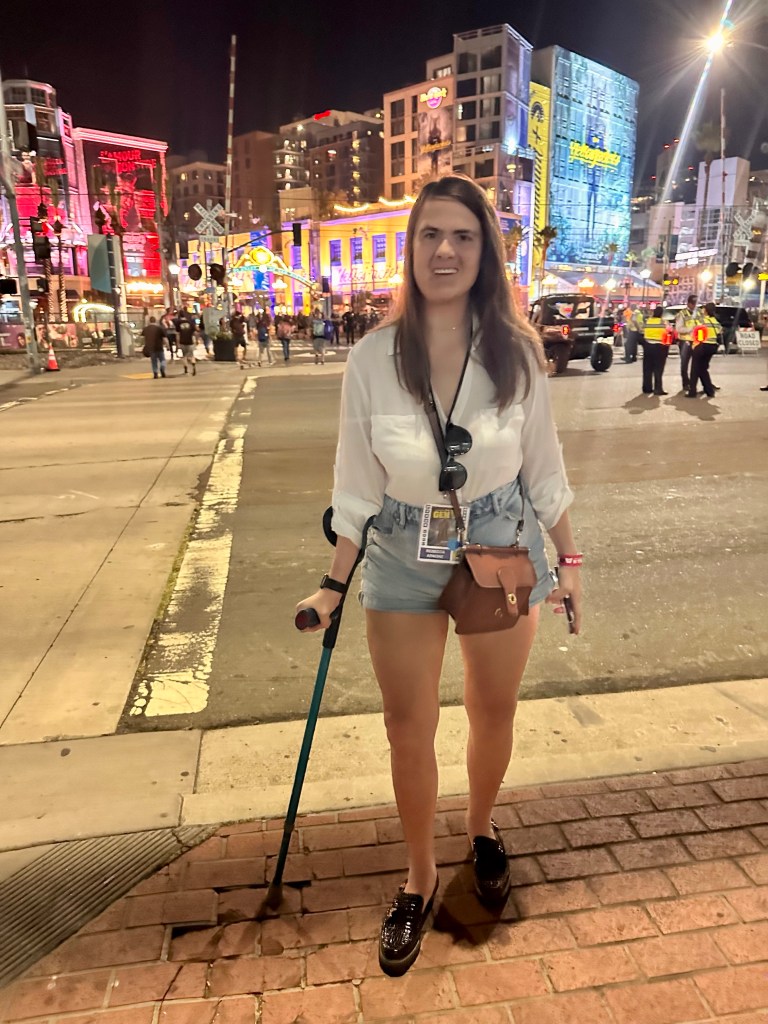


Comic-Con has been around for decades and has become famous for becoming a fan driven annual event.
The most die hard fans are known for camping out in lines for the biggest panels of their favorite movies and tv shows.
Since acquiring Marvel Studios, Disney has decided to take all of the big releases and announcements to their biennial D23 expo in Anaheim, California.
The let down for Comic-Con isn’t due to the lack of content from the writers/actors strike, it’s realizing that the excitement and joy of epic panels that you’ll talk about for years to come has passed with the turnover of dueling tv/movie fandoms of Marvel’s The Avengers and HBO’s Game of Thrones.
The captivation of surprise sunset San Diego Orchestras performances and magic Wizarding World wands during Warner Brother’s Fantastic Beasts panels was long gone when Hall H was used to promote unknown projects like Kalki 2898 AD and Ghosts of Ruin.
With no fan base to fill Hall H with, the echos of Robert Kirkman’s voice feels hollow after waiting all year for Comic-Con Hall H Saturday panels.
It remains to be seen if Comic-Con International can stay afloat through a content slump but it’s certain that the tipping point of the writers/actor’s strike has has plunged the annual event into irrelevancy.
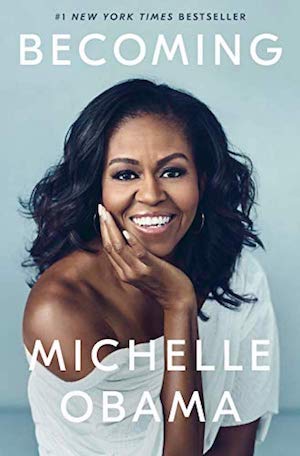
Becoming by Michelle Obama is a gorgeous memoir of everywhere she’s been and rescinds the idea of passive conformity. Mrs. Obama takes readers on her life’s journey of how she worked through her life to be the driver of her own destiny.
The self-described box checker ticks through the experiences which brought her and her husband as she would call him, to the decision to run for the highest office.
Those experiences are what made Becoming feel like I was meeting the mentor I always needed but never got. I felt introduced to a woman full of humility navigating the treacherous waters of life in politics. She writes as gracefully as a former first lady but as honestly as modern mother raising kids in the 21st century. Her down to earth mindset felt relatable when I had no reason to relate.
Mrs. Obama’s interpretation of politics and her understanding that progress in this country tends to pass slowly cuts through the optical carefulness of traditional politics when she admitted to inner-city school kids that no one in politics would be rescuing them. Some in politics might not even know those kids exist. She encouraged them to channel their path through school and education which came across as the most honest and encouraging thing she could give to kids. Telling them not to wait for her or anyone else to change life for them.
The only thing that rang as ingenuine was when the former FLOTUS spent a chapter talking about how the position of first family constantly made her feel confined due to meticulous schedule planning and secret service protection. Mrs. Obama in the next chapter talked about her first trip to Walter Reid Medical Center to visit with wounded soldiers and she wrote that she was scheduled to spend 90 minutes at the hospital and ended up spending four hours there. It felt out of character with the description she previously made of detailed plans that executive branch staff was dedicated to. But this anecdote doesn’t take away from the sincerity of the woman.
Becoming is a piece of advice offered to the world by an intelligent, determined and passionate woman to take or leave but her honesty is not up for debate.

As we grapple with ourselves in an explosive time for social justice, I would recommend taking a look back at this country’s past with bigotry and discrimination through the lens of disability.
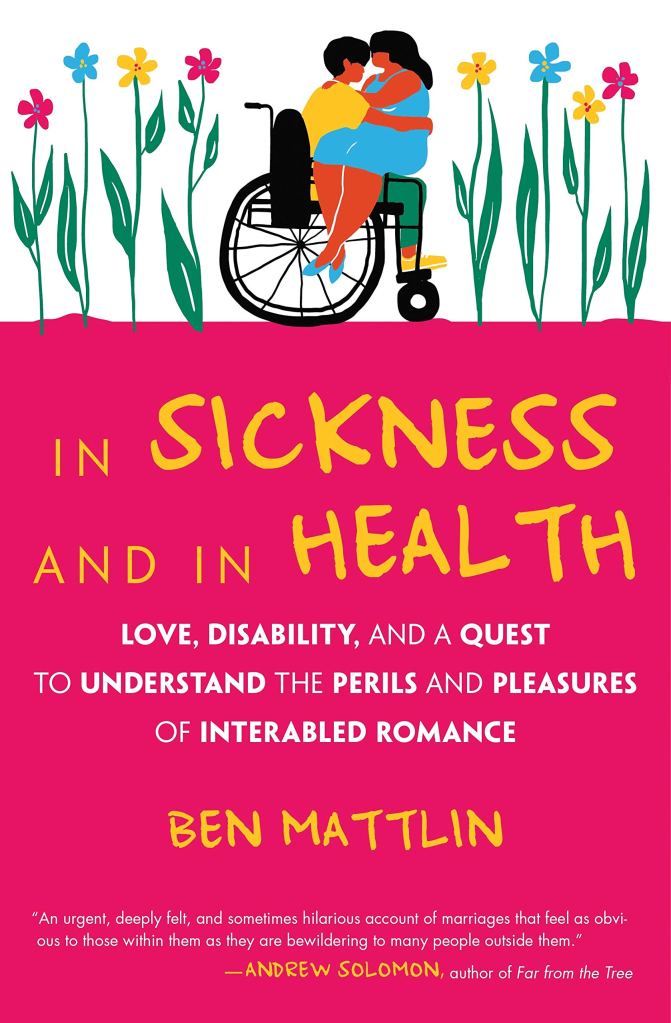
For this exercise, I’d recommend two books: A Disability History of the United States by Kim E. Nielsen and In Sickness and in Health by Ben Mattlin.
A Disability History of the United States walks the reader through the historical definition of disability and how the implication of that designation was used to exclude blacks, women and immigrant Americans from institutions in this country.
In the book there are historical examples of the disabled designation being used to exclude groups. For example, women weren’t permitted to go to school because they weren’t considered able to “handle” coursework. When slavery was abolished, groups of black people were declared mentally unfit because they couldn’t “handle” freedoms. During eugenics, immigrants were labeled disabled and therefore denied entry at Ellis Island for the most superficial reasons.
This idea is important to contemporary issues we face today because by the facing the prejudices rooted in the country’s past and building, it’s understandable to recognize that exclusion was not erased when laws were made to end such practice.
The point is driven home by In Sickness and in Health where the author explores the relationships of inter-abled couples and how we face real bigotry in our everyday lives from family and from strangers. The expression of bigotry exemplified in this book isn’t constrained to disability and able-bodied readers are confronted with their biases in an uncomfortable yet personal way that can serve to teach a lesson about unintended prejudice.
The lesson is that intention and impact are two separate things to consider when we think about how what we say and do. You may not intend to insult a stranger in a wheelchair when you walk up to them and ask to pray for them, but the impact doing so may have on that person may be burdensome. This same lesson applies to what we say and do in inter-racial relations.


To wax or not to wax?
I have always loved being well groomed. I had a pretty decent unibrow until the age of 14 when my mom let me get facially waxed for the first time. We couldn’t afford to get the service regularly so in high school, I plucked and jeeze, WHAT A NIGHTMARE (see photo)!
As I came into my adulthood, I decided that having well-groomed eyebrows would be a high priority to me. Due to moving a lot for my husband’s career, that means I’ve had to frequently find new waxers. I can say from experience, it isn’t easy finding a waxer that doesn’t cost a fortune (looking at you Ulta Benefit Brow Bar) but at the same time listens to what you say you want your brows to look like. For example: I have decently thick brows and I like them thick but groomed. Currently, I’m weighing if I want full on Caterpillar thick.
When choosing a esthetician, I’ve found a few things help:
Waxing Vs. Threading facial hair:
I had been going to a salon regularly for facial waxing when the esthetician asked if I’d ever had threading. I hadn’t, so I tried it. It was PAINFUL, not as quick as waxing but just as nice at the end. As month’s went on, and I went back to the salon every two weeks, if felt more and more painful each visit. I remember the last time I got threaded, the entire time I had the urge to be fight back as if I were being attacked by the threader because of the pain I was in. I’m not a violent person and after that visit I requested only waxing. I think waxing is more expensive than threading but worth the quick procedure.
Here’s just a funny wax story:
One time, I went to my regular salon to get my brows done the day before a cousin’s wedding and I was getting the services I’d been getting regularly, from the same waxer. Near the end of the wax, she pulled off the wax and said, “uh oh.” What a terrifying thing to hear from your waxer. I immediately asked, “what’s wrong?” and she handed me the mirror and said, “Oh I just didn’t get all the wax off.” Thankfully, there was nothing for me to be worried about, but I’ll never forget how terrified I was hearing those words.
Full Leg Waxing
I have only begun having my legs waxed last summer. Let me tell you, if you can afford it and you hate/have trouble shaving in the shower (like me since I have mobility/reaching issues from my hip replacement) I HIGHLY recommend leg waxes. It hurts a bit the first time you wax an area (according to my waxer) and gets better after but it is SO worth not having to think about that hair for a month (my hair grows slow enough that I wax at six week intervals). Or even if you just want to budget for a full leg wax over the summer while you’re wearing dresses and shorts.
My former esthetician explained to me that at least the hair on your leg has three growth cycles. So, if you’re getting your legs waxed for the first time, it will take three sessions to achieve peak smoothness.
For a more affordable waxing option, I buy Nad’s Facial & separate Body Wax Strips (https://www.amazon.com/dp/B003JFJF4A/ref=cm_sw_r_oth_api_i_xyyZEb2A1A92A). They’re hypoallergenic and may take several tries to get the hair out but do work. (Remember to pull the strip off opposite direction that the hair grows)
Here’s a rule I live by when it comes to waxing: Pluck what you can, wax what you can’t. So, I facially, I get my brows and upper lip waxed. I wax my legs as well. I used to get my chin as well, but realized the extra cost wasn’t worth the five long hairs I could easily pluck on my chin). Also, I shave my armpits because it’s very quick and easy for me to do so I don’t think it’s worth it to wax.

1. Practice Focusing
Also known as meditation, focusing can be like a lightning rod for anxiousness. Originally created by founding father, Benjamin Franklin, a lightning rod “attempts to carry the harmful electrical current away from the structure and safely to ground.” When you focus on anything or nothing, your mind carries away the anxious thoughts from the forefront of your consciousness. It doesn’t solve any problems except for if your problem is overthinking.
2. Practice self-soothing/care
Everyone has a different idea of what self-care looks like for themselves. For some women, it’s a soothing bath. For others it’s curling up with a book for a half-hour or hour each night. Whatever it is you like doing, make sure you make time to do it on most days.
If you have trouble finding time for self-care, I’ve found time by examining my sleep schedule. I realized I had been sleeping for ten hours every night. A Harvard Medical School article stated, “Too little or too much sleep can increase your perception of fatigue.” So, not only will you feel better for getting the right amount of sleep, you might get a couple extra hours in your day.
3. Practice kindness/Empathy
Empathy is something that comes natural to me, but I’ve had to learn it does not for everyone. If you’re part of the latter group, a great way to learn empathy would be to kindle a relationship with someone who is empatheic. Getting an up-close look at someone’s natural ability to be empathetic will show you exactly how you can implement it in your life.
Empathy/kindness will relieve your anxiety by reminding you that there is more to the world than your worries. By giving you perspective, empathy automatically shrinks your anxiety. When your anxiety is smaller, you will have a clearer mind to think logically about those troubles.
4. Learn logic
Logic is an actual field of study and is a skill which serves as an alternative way to think about/solve your problems. Since anxiety is full of emotional feelings, and not everyone in your life will always be sympathetic to those feelings, it’s best to learn what is a standard school of thought so you can apply it when you can.
I learned at a class one time that we can’t control our feelings, but we can control how we react to them. Learning logic will give you an upper hand when trying to persuade someone to your idea about your feelings. Think of it as a weapon on the battlefield of ideas.
5. Get fresh air/sunlight regularly & get moving
If you’re not getting fresh air/sunlight/activity you’re failing your body in a critical way. The human body is evolved to function better when it has that TLC. This evolutionary change is related to our human past as hunters/gatherers. “Notably, the parts of the brain most taxed during a complex activity such as foraging — areas that play a key role in memory and executive functions such as problem solving and planning — are the same areas that seem to benefit from exercise in studies.”
Practicing this ritual can also be a great way to help clear your mind.
Sources
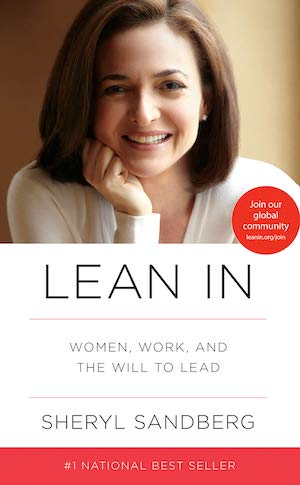
Lean in to leadership without sacrificing likability in Sheryl Sandberg’s guide to women in leadership. It is a gripping instruction on why women hold so few positions of power when we make up half the pool.
Sandberg provides stacks of information like the leadership role gap between men and women in politics and business which contradicts how girls and boys perform in school. She brings up glaring differences in how mothers care for their babies such as “mothers overestimate the crawling ability of their sons and underestimate the crawling abilities of their daughters.”
The author not only explains the differences in how our culture treats men versus women but how and why women retreat from excelling to the top of their fields on their own after education. Factors like perceptions, expectations and confidence define women and their opportunities. However, abilities do not define those opportunities.
Lean In would be an illuminating book for women, career driven or not, because it urges women to not think like a man like some advice, but to acknowledge the rules culturally placed on women and excel at those to get ahead. This could be clearly applied to a career or any woman who’d like to command her deep will to lead in any circumstance.
Sandberg makes clear that she doesn’t think it’s fair that women must adhere to different rules than men but the implicit goal is to get more women in leadership to change that expectation.
When it comes to co-parenting and managing careers, Sandberg suggests not only do parents buck entrenched norms, but actively challenge those stereotypes and don’t humble-brag that you’ve done it. She reminds readers that, “gender specific expectations reman self-fulfilling.”
Sandberg’s advice often comes off as, “it’s so easy you just… one, two three.” And some of the counsel she suggests were possible because she and her since deceased husband had lives of privilege. But Sandberg does acknowledge how fortunate she and her husband had been.
The frankness and deftness Sandberg writes with is a refreshing voice in the self-help book market.
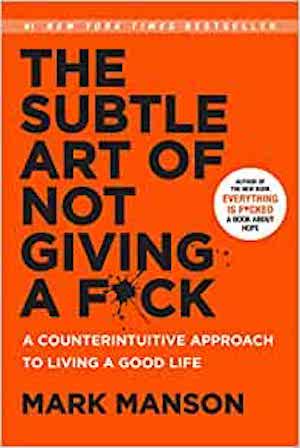
This blunt title sets the stage for a foolish form of familiar lessons.
Manson brings up “the feedback loop from hell” and our abilities as humans to have conscious thoughts about our thoughts. He says you can ‘short circuit’ the feelings of guilt, anger and sadness for feeling those exact feelings by not caring because the world is messed up.
The argument that the more you pursue something you don’t have (a quality/material item) the more you reinforce that you don’t have it and the further away it gets is well founded in philosophy.
Philosophers like John Stuart Mill and Friedrich Nietzsche have thought about the ‘paradox of hedonism.’ This idea isn’t original and plays as a person capitalizing on better thinker’s ideas by presenting it in bite sizes.
As a former high school Lincoln-Douglas debater (a philosophical type of debate) I resent the thought that people can’t or won’t care about classical philosophy enough to seek it out themselves. Also, that they need it spoon fed to them in the platitudes of an asshole.
Cutting down conventional philosophy into morsels of advice for achieving more happiness is witless even if it’s packaged to be edgy.
The advice to care about what you care about is cliché and obvious, so the rest of the book is just a jerk proving he’s a jerk and swearing a lot.
Manson does bring up important bullet points that build happiness but these ideas are weighty and complex and cannot be halfway explored in less than 10-minute chapters.
Ideas like victimhood, exceptionalism and problem solving are worth studying but saying that problem solving is vital to happiness and explaining how to problem solve are two different things and Manson fails to actually help with the latter.
But the author, Mark Manson, won’t even care that some obscure blogger wrote this criticism of his book because he doesn’t give a f*ck.
 PineappleBuzz 🍍