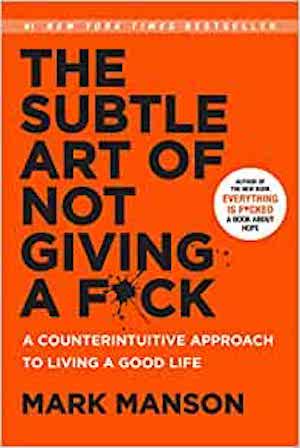
This blunt title sets the stage for a foolish form of familiar lessons.
Manson brings up “the feedback loop from hell” and our abilities as humans to have conscious thoughts about our thoughts. He says you can ‘short circuit’ the feelings of guilt, anger and sadness for feeling those exact feelings by not caring because the world is messed up.
The argument that the more you pursue something you don’t have (a quality/material item) the more you reinforce that you don’t have it and the further away it gets is well founded in philosophy.
Philosophers like John Stuart Mill and Friedrich Nietzsche have thought about the ‘paradox of hedonism.’ This idea isn’t original and plays as a person capitalizing on better thinker’s ideas by presenting it in bite sizes.
As a former high school Lincoln-Douglas debater (a philosophical type of debate) I resent the thought that people can’t or won’t care about classical philosophy enough to seek it out themselves. Also, that they need it spoon fed to them in the platitudes of an asshole.
Cutting down conventional philosophy into morsels of advice for achieving more happiness is witless even if it’s packaged to be edgy.
The advice to care about what you care about is cliché and obvious, so the rest of the book is just a jerk proving he’s a jerk and swearing a lot.
Manson does bring up important bullet points that build happiness but these ideas are weighty and complex and cannot be halfway explored in less than 10-minute chapters.
Ideas like victimhood, exceptionalism and problem solving are worth studying but saying that problem solving is vital to happiness and explaining how to problem solve are two different things and Manson fails to actually help with the latter.
But the author, Mark Manson, won’t even care that some obscure blogger wrote this criticism of his book because he doesn’t give a f*ck.
 PineappleBuzz 🍍